
Mard-e-Abresham by Bano Qudsia – Book Review & Summary
Bano Qudsia was born in Ferozpur, British India, and moved to Lahore following the creation of Pakistan in 1947. She completed her BA at Kinnaird College and went on to finish her MA in Urdu at Government College Lahore in 1951. Over her career, she wrote a long list of celebrated novels — including Raja Gidh, Haasil Ghaat, Purwa, Kuch Aur Nahi, and Aik Din alongside television dramas and radio plays. She was married to fellow novelist Ashfaq Ahmed, and the Government of Pakistan honored her with both the Sitara-e-Imtiaz and the Hilal-e-Imtiaz for her contributions to literature.
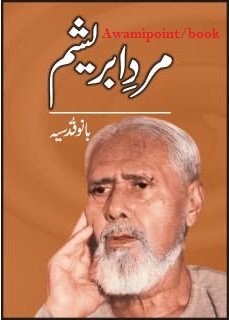
A Tribute Rather Than a Novel
Unlike most of Bano Qudsia’s fiction, Mard-e-Abresham by Bano Qudsia isn’t a story in the traditional sense — it’s a compact, 77-page tribute to Qudratullah Shahab, the renowned Pakistani bureaucrat, writer, and Sufi intellectual. Shahab was closely connected to Bano Qudsia’s own circle; he was a close friend of Mumtaz Mufti and Ashfaq Ahmed, and shared a family relationship with Ashfaq as well. Bano Qudsia held deep respect for Shahab, drawing much of her own spiritual outlook from his influence, and this book reflects that admiration directly.
Who Was Qudratullah Shahab?
To understand the weight of this tribute, it helps to know who Shahab was. Born in Gilgit in 1917, where his father served as Governor under Dogra rule, Qudratullah Shahab joined the Indian Civil Service in 1940 and later volunteered during the 1943 Bengal famine. After Pakistan’s independence, he held a series of senior government posts — Deputy Secretary in the Ministry of Commerce, Chief Secretary of Azad Kashmir, Deputy Commissioner of Jhang, and eventually Principal Secretary to the Governor-General, a role he held through the Iskander Mirza and Ayub Khan eras. He later served as Pakistan’s Ambassador to the Netherlands and as Secretary of Information and Education, before resigning in protest during Yahya Khan’s regime and living in self-imposed exile in the UK. In 1959, he founded the Pakistan Writers Guild and served as its first president. He’s best remembered today for his autobiography Shahab Nama, published posthumously in 1986.
Why This Book Matters
Mard-e-Abresham by Bano Qudsia works almost like a personal memoir of influence — one writer paying tribute to the man whose spiritual and intellectual outlook shaped her own. It offers a rare, intimate perspective on Shahab, not as a historical figure viewed from a distance, but as someone genuinely known and admired within Bano Qudsia’s own literary and personal circle.
Who Should Read This Book
This short but meaningful work is best suited to readers interested in Pakistani intellectual history, Sufi thought, or the personal relationships between the country’s most influential writers. It’s also valuable for anyone who has read Shahab Nama and wants a complementary perspective from someone who knew Qudratullah Shahab personally.
The Takeaway
Mard-e-Abresham by Bano Qudsia is less about plot and more about legacy — a reminder of how deeply one writer’s spiritual and intellectual life can shape another’s, and how tribute itself can become a form of literature.
Where to Find It
Mard-e-Abresham is available through licensed Urdu book publishers and retailers. Supporting original sources helps preserve Bano Qudsia’s literary legacy for future generations of readers.

Comments (0)