
Bano Qudsia was born on 28 November 1928 in Firozpur, British India, as Qudsia Chattha. Her father held a Bachelor’s degree in Agriculture, and her brother Pervaiz Chattha was a painter. After Partition, her family moved to Lahore, where she began writing short stories as early as the fifth grade. She graduated from Kinnaird College and later completed her master’s in Urdu literature at Government College University (GCU) Lahore in 1951 — a foundation that would shape one of the most celebrated writing careers in Urdu literature. She was married to Ashfaq Ahmed, another towering figure in Urdu letters, and is best remembered for her landmark novel Raja Gidh.
A Collection Built for the Stage
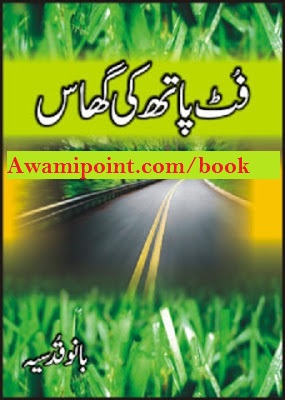
What makes Footpath Ki Ghaas by Bano Qudsia stand apart is its format. Rather than a single narrative, it brings together twelve short Urdu novelettes, or afsanay, many of which were written with dramatization in mind. Bano Qudsia had a long history writing for both stage and television, and that background shows clearly here — each story carries a strong sense of scene and setting, almost as if it were staged rather than simply narrated.
The twelve stories in the collection are:
- Chatan Par Ghonsla
- Sarab
- Anjanay Mein
- Shikayatein Hikayatein
- Khul Sim Sim
- Sanwal Mor Maharan
- Ankh Macholi
- Footpath Ki Ghas
- Raat Gaye
- Ali Baba Aur Qasim Bhai
- Achay Din Ka Intizar
- Yeh Junon Nahi To Kiya Hai?
What Ties the Stories Together
Across these twelve pieces, Bano Qudsia returns again and again to social and moral questions — the kinds of everyday obstacles that stand in the way of a better society. She doesn’t just describe problems; she seems genuinely invested in pointing toward change, using each story’s setting and characters to highlight where things go wrong and why. Because several of these stories were adapted for drama, the writing carries a visual, almost cinematic quality that pulls readers into a fully imagined world scene by scene.
A Closer Look at the Style
Given her theatrical background, it’s no surprise that Footpath Ki Ghaas by Bano Qudsia reads differently from her longer novels. The pacing is tighter, the settings more vivid, and the emotional beats land quickly — all hallmarks of writing meant to be performed rather than just read silently. For readers already familiar with her plays, this collection offers a chance to see those same instincts at work in prose form.
Is This Collection for You?
This book is best suited to readers who enjoy short-form storytelling with a strong sense of place and social commentary. It’s also a great pick for anyone interested in Urdu drama and stagecraft, since several of these stories carry the DNA of scripts more than conventional short fiction. Longtime fans of Bano Qudsia’s television and stage work will likely find this one of her more distinctive collections.
The Takeaway
Beyond its entertainment value, Footpath Ki Ghaas by Bano Qudsia offers a window into the social concerns of its time — and a reminder of how effectively drama and short fiction can work together to make a point land harder than a straightforward essay ever could.
Where to Find It
Footpath Ki Ghaas is available through licensed Urdu book publishers and retailers. Supporting original sources helps preserve Bano Qudsia’s literary legacy for future generations of readers.

Comments (0)