Bano Qudsia was born in Ferozpur, Punjab, on November 28, 1928, and later moved to Lahore with her family during Partition. Her father, a landlord, passed away when she was still young. She went on to become one of the most celebrated names in Urdu literature, writing novels, television plays, and stage dramas in both Urdu and Punjabi. Her most famous works include Raja Gidh and Haasil Ghaat, and Mom Ki Galiyan by Bano Qudsia stands alongside them as one of her more reflective, layered novels — often described as a spiritual companion piece to Raja Gidh.
She was married to Ashfaq Ahmad, another towering figure in Urdu literature, and together they shaped Pakistani letters for generations. Bano Qudsia received a lifetime achievement award for her writing, and her work has been translated into English and several other languages, extending her influence well beyond Pakistan.
Recognition and Legacy
Bano Qudsia’s contribution to literature was recognized repeatedly throughout her career. She won the Graduate Award for Best Playwright in 1986, 1988, 1989, and 1990, and received the Taj Award for Best Playwright in 1986 as well. Some of her most notable plays include Tamil, Hawa Ke Naam, Seharay, and Khaleej. The Government of Pakistan honored her with the Sitara-e-Imtiaz in 2003 and the Hilal-e-Imtiaz in 2010, and the Pakistan Academy of Letters awarded her the Kamal-e-Fun Award the same year.
About the Book
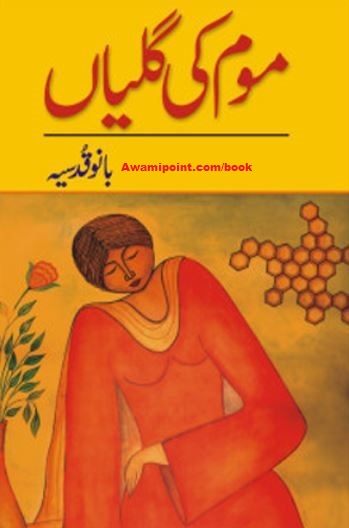
Mom Ki Galiyan by Bano Qudsia is a novel that takes its time revealing itself. The first half can feel slow, almost uneventful, but that patience pays off — the story gradually shifts into something far richer, and by the end, every thread feels deliberately placed. It’s the kind of book where the meaning becomes clear mostly in hindsight.
At its core, the novel uses the life of a bee as an extended metaphor for the human experience. A bee spends its whole life gathering honey, moving from flower to flower, only for another creature to eventually take what it collected — after which the cycle simply starts over. Bano Qudsia uses this image to reflect on the quiet, repetitive nature of human striving, and how much of what we build in life is ultimately shaped by forces beyond our control.
Main Points of the Book
- A slow-building narrative that rewards patient reading, with its full meaning emerging closer to the end
- Central metaphor comparing human life to the cycle of a bee gathering honey
- Reflection on effort, loss, and the repetitive nature of human striving
- Strong thematic connection to Raja Gidh, exploring similar existential questions
- Continues Bano Qudsia’s recurring focus on women’s roles and responsibilities within family life
Themes Worth Noting
The novel leans heavily into questions of purpose and futility — what it means to spend a life working toward something, only to have it taken or lost. It’s not a fast-paced or plot-driven read; instead, it asks readers to sit with the discomfort of not knowing whether the story is “good” or “bad” until they’ve had time to reflect on it afterward. That ambiguity is intentional, and it’s part of what makes the book linger with readers long after they finish it.
Who Should Read This Book
Mom Ki Galiyan by Bano Qudsia is best suited to readers who enjoy slower, more philosophical fiction over fast-paced storytelling. Fans of Raja Gidh will likely see this as a natural companion read, since both novels wrestle with similar existential themes. It’s also a good fit for readers interested in metaphor-driven literature, where the surface story matters less than the deeper idea it’s built around.
What You Can Learn From It
The novel offers a meditation on the cyclical nature of effort and loss — a theme that applies well beyond its original context. It encourages readers to reflect on how much of life’s meaning comes not from the outcome of our efforts, but from the process itself. It’s a useful reminder that not every story needs a clean resolution to be worth telling.
Where to Find It
Mom Ki Galiyan is available through licensed Urdu book publishers and retailers. Supporting original sources helps preserve Bano Qudsia’s literary legacy for future generations of readers.
Comments (0)