

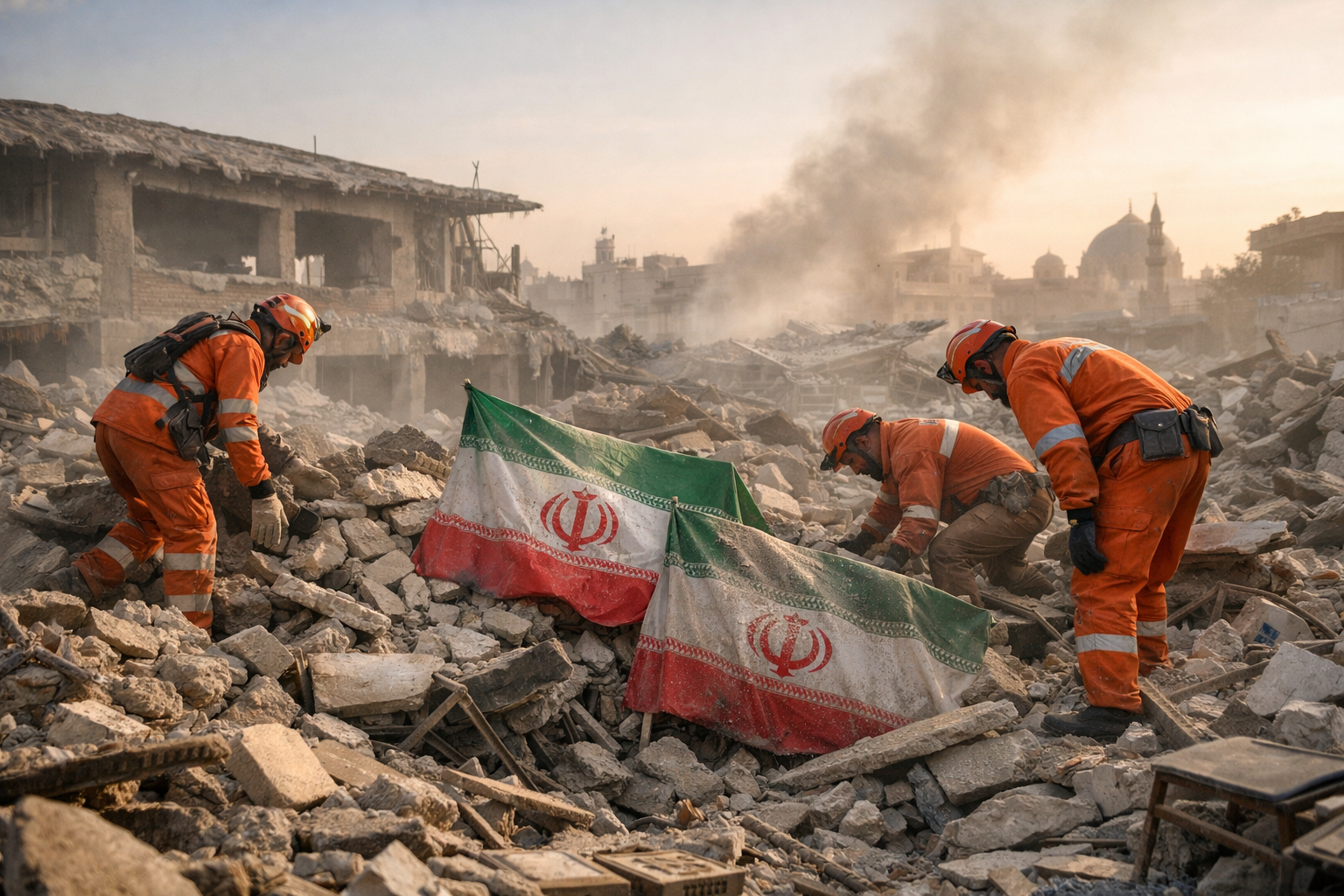
Tel Aviv/Tehran – In a staggering disclosure that underscores the scale of the ongoing conflict, Israel claims 1200 bombs dropped on Iran in a single day during the joint military operation with the United States. The Israeli Air Force announced that it targeted numerous military facilities across Iran, but Iranian officials report that civilian infrastructure, including a girls’ primary school, was also struck, resulting in mass casualties.
The announcement that Israel claims 1200 bombs dropped on Iran represents the most detailed accounting yet of the aerial campaign that killed Supreme Leader Ayatollah Ali Khamenei and triggered the current cycle of retaliation. However, the joy of military achievement in Tel Aviv and Washington is tempered by growing concern over civilian deaths and the potential for further escalation.
Breaking: Israel Claims 1200 Bombs Dropped on Iran
In an official statement, the israel air force strikes iran campaign was described as the most extensive in the nation’s history. Military spokespersons detailed that Israel claims 1200 bombs dropped on Iran as part of the us israel joint operation iran that targeted the Supreme Leader’s office, IRGC command centers, missile facilities, and nuclear-related infrastructure.
The israel claims 1200 bombs dropped on Iran figure represents an average of one bomb every 72 seconds over a 24-hour period, demonstrating the intensity of the air campaign. Israeli officials stated that the operation achieved most of its objectives, though they acknowledged that some targets remain and further strikes may be necessary.
The Civilian Toll: School Strike in Minab
While Israel claims 1200 bombs dropped on Iran on military targets, Iranian sources present a different picture of the devastation. According to reports from Hormozgan province in southern Iran, a girls’ primary school in the city of Minab was hit during the bombardment.
The minab girls school attack has become a focal point of Iranian outrage. Local officials report:
- At least 148 people killed in school bombing
- Dozens more injured, many critically
- Victims primarily young girls and school staff
- The school was in session when the strike occurred
- Rescue operations continue as families search for missing children
The iran school bombing has been condemned across Iranian society, with images of young victims circulating on social media and fueling demands for revenge. The civilian casualties iran from this single incident exceed military losses reported elsewhere, raising questions about targeting precision.
Iran’s Response: Abbas Araghchi’s Warning
In the aftermath of the confirmation that Israel claims 1200 bombs dropped on Iran, Iran’s Foreign Minister has issued a stern warning. The abbas araghchi statement leaves no room for ambiguity about Tehran’s intentions:
“This attack on a school, in which dozens of innocent children were killed, will not go unanswered.”
The iran foreign minister reaction specifically highlights the Minab school tragedy as a red line that cannot be crossed without consequences. Araghchi’s words echo the broader Iranian position that Israel claims 1200 bombs dropped on Iran including civilian infrastructure, transforming the conflict from a military engagement into a national wound that demands vengeance.
The Minab Tragedy: What Happened?
To understand why Israel claims 1200 bombs dropped on Iran has become such a contentious issue, one must examine the Minab incident in detail:
Minab is a city in Hormozgan province, approximately 80 kilometers east of Bandar Abbas, a major naval base. The girls’ primary school was located in a residential area, not obviously adjacent to military installations. According to survivors:
- The attack occurred during morning classes
- Multiple explosions were heard
- The school building collapsed partially
- Children were trapped under rubble
- Local hospitals overwhelmed with casualties
- Parents rushed to the scene in desperation
The minab girls school attack has become a symbol of Iranian suffering, used by the government to rally domestic support and by hardliners to demand escalation.
Israeli Response to Civilian Casualty Allegations
Following reports that Israel claims 1200 bombs dropped on Iran and the subsequent civilian casualties, Israeli officials have responded:
- The IDF stated that it targets only military objectives
- An investigation into the Minab incident has been announced
- Initial assessments suggest possible weapons malfunction or Iranian air defense debris
- Israel expresses regret for any civilian casualties but holds Hamas and Hezbollah responsible for operating in civilian areas (though no such groups operate in Minab)
The israel claims 1200 bombs dropped on Iran narrative faces credibility challenges as images of dead children circulate globally, potentially shifting international opinion against the operation.
International Reaction
The global community has responded with alarm to reports that Israel claims 1200 bombs dropped on Iran and the subsequent civilian deaths:
united nations response:
- Secretary-General Antonio Guterres called for an independent investigation
- The UN expressed “deep concern” over civilian casualties
- Humanitarian agencies requested access to affected areas
international condemnation:
- Russia and China strongly condemned the school strike
- Several Muslim-majority nations called for emergency UN session
- Human rights organizations demanded accountability
- Some European allies expressed concern while stopping short of condemnation
us government position:
- The United States expressed regret for civilian casualties
- Stated that Israel has the right to self-defense
- Called for de-escalation while supporting the operation
Strategic Implications
The revelation that Israel claims 1200 bombs dropped on Iran combined with civilian casualties creates complex strategic challenges:
For Israel:
- Military achievement overshadowed by moral questions
- International support may erode as images circulate
- Iran gains propaganda advantage
- Retaliation becomes more likely and potentially more severe
For Iran:
- The regime can rally domestic opinion around victimhood
- Moderate voices lose ground to hardliners demanding revenge
- International sympathy may increase
- The school strike becomes a unifying symbol
For the United States:
- Association with the operation carries reputational costs
- Calls for restraint from allies may increase
- Regional partners may distance themselves
- The path to de-escalation becomes more difficult
The Human Cost
Beyond the strategic calculations, the Israel claims 1200 bombs dropped on Iran announcement must be measured against human reality:
In Minab, families are burying their children. Parents who sent daughters to school yesterday are now planning funerals. Teachers who dedicated their lives to education are among the dead. A community is shattered.
The civilian casualties iran extend beyond Minab:
- Residential areas near military sites in Tehran affected
- Villages in Bushehr province damaged
- Civilian infrastructure in Isfahan region struck
- Medical facilities overwhelmed with wounded
The iran school bombing has become the human face of a conflict otherwise discussed in terms of strategy, geopolitics, and military capability.
Iran’s Retaliation Calculus
Now that Israel claims 1200 bombs dropped on Iran and civilians have died, Tehran faces critical decisions:
Option 1: Proportional Military Response
Target Israeli military assets without causing mass civilian casualties, demonstrating capability while limiting escalation.
Option 2: Disproportionate Response
Strike Israeli cities or infrastructure to inflict pain comparable to Iran’s suffering, risking full-scale war.
Option 3: Proxy Warfare
Activate Hezbollah, Iraqi militias, and Houthis to attack Israeli and American targets, maintaining plausible deniability.
Option 4: Diplomatic Offensive
Use the school strike to isolate Israel internationally, seeking UN condemnation and sanctions.
Option 5: Nuclear Signaling
Conduct a nuclear test or announce withdrawal from the NPT, demonstrating ultimate capability.
The iran foreign minister reaction suggests Option 1 or 2 is likely, with Araghchi’s words implying direct retaliation.
Historical Context
The claim that Israel claims 1200 bombs dropped on Iran invites comparison with previous aerial campaigns:
| Operation | Bombs | Duration | Target |
|---|---|---|---|
| Desert Storm (1991) | 88,500 tons | 43 days | Iraq |
| Allied Force (1999) | 23,000 | 78 days | Yugoslavia |
| Iraqi Freedom (2003) | 29,199 | 21 days | Iraq |
| Current Operation | 1,200+ | 1 day | Iran |
While 1,200 bombs in one day is significant, modern warfare has seen larger campaigns. However, the concentration of strikes on a single country in such a short period is noteworthy.
What Comes Next?
As the world processes that Israel claims 1200 bombs dropped on Iran and civilians have died, the region braces for:
- Iranian Retaliation: Almost certain, possibly within days
- International Diplomacy: Intensified efforts to prevent escalation
- Media War: Both sides will contest the narrative
- Domestic Reactions: Iranian unity may strengthen; Israeli public supports operation but may question civilian deaths
- Global Markets: Oil prices already elevated may spike further
Analysis: The Information War
The competing narratives around Israel claims 1200 bombs dropped on Iran illustrate the information dimension of modern conflict:
Israeli Narrative:
- Precise strikes on military targets
- 1,200 bombs, 27 bases hit, strategic success
- Civilian casualties unfortunate but unintended
- Iran’s school strike may be propaganda or air defense debris
Iranian Narrative:
- Barbaric attack on sovereign nation
- Supreme Leader assassinated, civilians murdered
- 148 children killed in school bombing
- Israel and America are war criminals
The truth likely lies somewhere between, but perceptions shape reactions. The iran school bombing images are more powerful than statistics about military targets.
Conclusion
The confirmation that Israel claims 1200 bombs dropped on Iran represents both military achievement and moral complication. While the operation achieved its primary objectives—eliminating the Supreme Leader and degrading Iranian military capabilities—the civilian cost, particularly the Minab school tragedy, threatens to transform the strategic landscape.
As Foreign Minister Abbas Araghchi vows that the attack “will not go unanswered,” and as images of dead children circulate globally, the path to de-escalation becomes ever narrower. The Israel claims 1200 bombs dropped on Iran story is not finished; the next chapter will be written in Iranian retaliation and international reaction.
For the families of Minab, for the nation of Iran, and for a region teetering on the edge of abyss, the only certainty is that more suffering lies ahead.
