

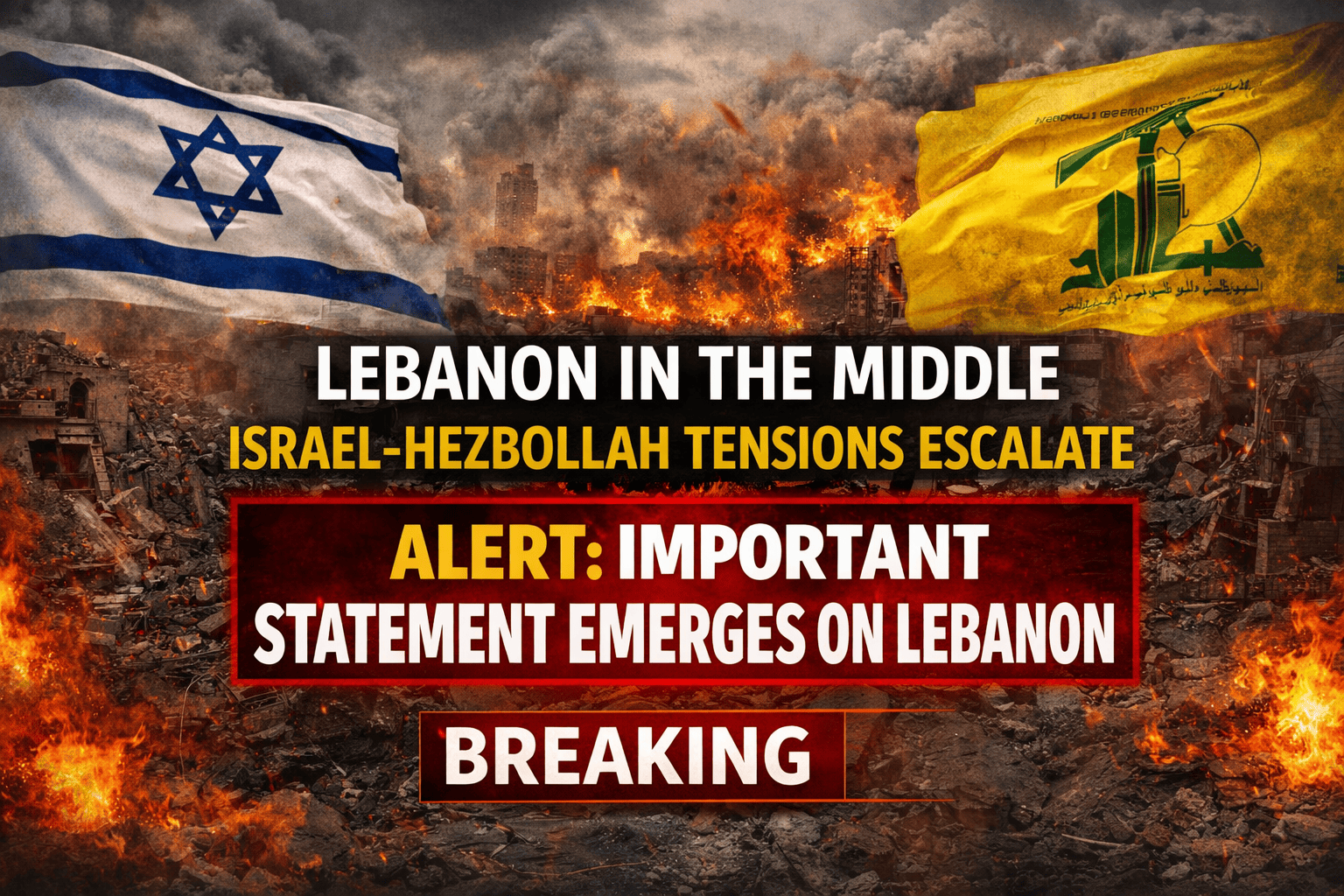
Beirut/Washington/Tehran – As the US-Israel attack on Iran continues to unfold, sending shockwaves across the Middle East, a crucial Lebanon statement emerges that could significantly impact the regional dynamics. The Lebanese government, walking a tightrope between its powerful Hezbollah faction and the desire for national stability, has issued a clear and decisive response to the escalating conflict.
As the US-Israel attack on Iran intensifies with airstrikes reported in Tehran and other strategic locations, all eyes have turned to Hezbollah, Iran’s most powerful proxy in the region. Would the Lebanese militant group enter the fray? Would Lebanon become a second front in what threatens to become a full-scale regional war?
It is in this charged atmosphere that a critical Lebanon statement emerges from the office of Prime Minister Nawaf Salam, addressing directly the concerns surrounding Hezbollah’s potential involvement.
The Statement: A Direct Message to Hezbollah
As the US-Israel attack on Iran dominates global headlines, Prime Minister Nawaf Salam addressed the nation and, more specifically, addressed Hezbollah with an unambiguous message. According to media reports, the Prime Minister stated:
“We will not allow Lebanon to be dragged into any adventure.”
This Lebanon statement emerges at a critical juncture when Hezbollah’s leadership is under immense pressure to respond in solidarity with Iran. The group has historically positioned itself as the vanguard of resistance against Israel and a staunch defender of Iranian interests in the Arab world. However, Salam’s words serve as a stark reminder that Lebanon’s national interests may not align with those of Tehran.
National Security and Unity: Non-Negotiable
When the US-Israel attack on Iran prompted questions about Lebanon’s official position, the Prime Minister’s office clarified further. The Lebanon statement emerges with additional weight as Salam emphasized:
“There will be no compromise on national security and unity.”
This declaration carries profound implications. It suggests that regardless of external pressures or alliances, the Lebanese state intends to maintain its sovereignty and prevent its territory from becoming a launching pad for retaliation against Israel or the United States. As the US-Israel attack on Iran continues, this position may create tension between the government in Beirut and Hezbollah’s leadership in the southern suburbs.
Why This Lebanon Statement Matters
The fact that this Lebanon statement emerges now is significant for several reasons:
- Hezbollah’s Dilemma: Hezbollah faces a strategic dilemma. Answering Iran’s call for escalation could fulfill its ideological commitments but would devastate Lebanon, which is already suffering from economic collapse and political paralysis. This Lebanon statement emerges as a warning that the government will not silently accept such a decision.
- Iran’s Isolation: As the US-Israel attack on Iran progresses, Tehran is watching its allies carefully. A Lebanon statement emerges that effectively distances the Lebanese state from the conflict, potentially leaving Iran with fewer active fronts than it might have hoped for.
- International Reassurance: The timing of when this Lebanon statement emerges also serves to reassure the international community, particularly Western nations and Gulf states, that Lebanon will not become a source of regional destabilization.
Lebanon’s Precarious Position
To understand why this Lebanon statement emerges with such urgency, one must appreciate Lebanon’s current state. The country has been mired in an unprecedented economic crisis since 2019, with its currency collapsing, banks failing, and citizens struggling for basic necessities. A new war would destroy any remaining hope of recovery.
When a Lebanon statement emerges warning against “adventurism,” it reflects the genuine fear among Lebanese officials that their nation, which has suffered decades of conflict, could once again become a battleground for regional powers.
Hezbollah’s Calculus
While this Lebanon statement emerges from the government, Hezbollah operates with significant autonomy. The group possesses an arsenal estimated at over 100,000 rockets and has fought multiple wars with Israel. However, the last major conflict in 2006 devastated Lebanese infrastructure, and another war would likely be even more destructive.
The Lebanon statement emerges as a challenge to Hezbollah’s leadership: Will they prioritize their alliance with Tehran or the stability of their home country? The answer to this question may determine Lebanon’s fate in the coming days.
Regional Reactions
As the US-Israel attack on Iran continues and this Lebanon statement emerges, reactions from other regional actors are pouring in:
- Israel is watching Hezbollah’s movements closely, with its northern border on high alert.
- Iran is likely disappointed by Lebanon’s official position but may still expect Hezbollah to act independently.
- Saudi Arabia and the UAE may view Lebanon’s stance positively, potentially opening doors for future diplomatic engagement.
- The United States welcomes any Lebanon statement emerges that prevents the conflict from spreading.
What Happens Next?
As this critical Lebanon statement emerges, several scenarios could unfold:
- Hezbollah Restraint: The group may choose to limit its response to rhetoric and minor actions, avoiding full-scale engagement while the US-Israel attack on Iran continues.
- Government-Hezbollah Tensions: If Hezbollah decides to act despite the warning, this Lebanon statement emerges as the opening salvo in a domestic political crisis between the group and the state.
- International Mediation: The fact that this Lebanon statement emerges could encourage international actors to engage with Lebanon to prevent spillover.
Analysis: A Calculated Move
Political analysts suggest that the timing of when this Lebanon statement emerges is no coincidence. Prime Minister Salam likely coordinated with various political factions before speaking, ensuring that his words carry weight. The Lebanon statement emerges as a unified message from the state, even if Hezbollah internally disagrees.
By making this position public, the Lebanese government has created a political reality: if Hezbollah does enter the conflict, it will do so against the express wishes of the national government, making it politically accountable for any consequences.
Conclusion
As the US-Israel attack on Iran reshapes the Middle Eastern geopolitical landscape, this Lebanon statement emerges as a crucial data point for understanding the conflict’s trajectory. Lebanon, a country that has historically been drawn into regional wars, is attempting to chart a different course.
Prime Minister Salam’s warning to Hezbollah reflects both the fears and the aspirations of millions of Lebanese citizens who desperately want peace and stability. Whether this Lebanon statement emerges as a definitive red line or merely a symbolic gesture will depend on Hezbollah’s calculations in the hours and days ahead.
The world watches as this delicate situation unfolds. Will Hezbollah heed the warning? Will Iran accept Lebanon’s neutrality? And most importantly, will Lebanon survive this crisis intact? Only time will tell.
For now, this Lebanon statement emerges as a beacon of hope for those who believe that small nations can resist being crushed between larger powers. The Middle East holds its breath, waiting to see what comes next.
